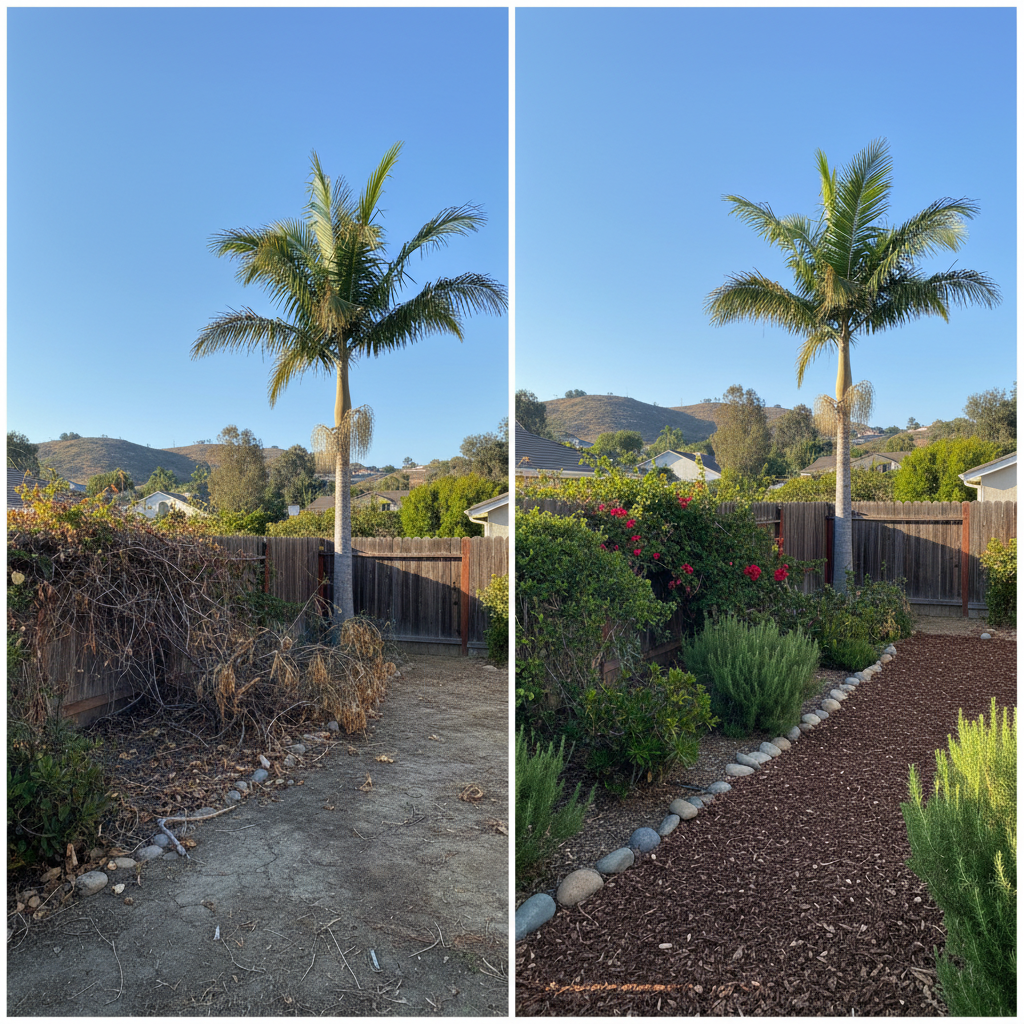
You've got shrubs and bushes in your yard, right? Most folks in Aliso Viejo do. And at some point, you're going to need to trim 'em. But there's a big difference in how you trim, and that difference can impact how your plants look, how healthy they are, and how much work you'll have to do down the road. I'm talking about shearing versus selective pruning, and it's a choice you should understand.
What's the Deal with Shearing?
Okay, let's start with shearing. This is what most people picture when they think of trimming. You grab the hedge trimmer – gas, electric, battery, doesn't matter – and you just buzz the surface of the plant. Think of it like giving your shrub a haircut with clippers, making it into a neat, often geometric shape. You see this a lot on hedges, formal gardens, or when someone just wants everything to look uniform and tidy, fast.
The Good Side of Shearing:
- Speed: It's quick. You can knock out a lot of shrubs in a short amount of time. If you've got a big property or a tight schedule, this is appealing.
- Uniformity: You get that clean, manicured look. If you like straight lines and perfect spheres, shearing delivers. It's great for creating privacy screens or defining borders.
- Cost (Initially): Because it's faster, if you're hiring someone, the labor cost for a single shearing job might be lower than a detailed selective prune.
The Downside of Shearing:
- Health Issues: This is where it gets tricky. Shearing often creates a dense outer layer of foliage, but the inside of the plant gets deprived of light and air. This can lead to weak growth, dead spots, and makes the plant more susceptible to pests and diseases. I've seen plenty of sheared plants in Aliso Viejo's coastal climate struggle with powdery mildew because of poor air circulation.
- Appearance (Long-Term): While it looks neat initially, over time, sheared plants can become leggy and woody on the inside, with just a thin layer of green on the outside. They can also get that 'broccoli head' look, where the top is much wider than the base, which isn't great for the plant's structure.
- Increased Maintenance: Because you're only cutting the tips, the plant responds by putting out a flush of new growth right where you cut. This means it grows back faster and needs more frequent shearing to maintain that neat shape. You're basically signing up for more frequent trims.
- Reduced Flowering: If your shrubs flower on old wood, shearing at the wrong time can remove all the flower buds for the season.
Now, Let's Talk Selective Pruning
Selective pruning is a more thoughtful, artful approach. Instead of just buzzing the surface, you're looking at each branch and making cuts based on the plant's natural growth habit. You're removing dead, diseased, or crossing branches, and thinning out the canopy to improve air circulation and light penetration. It's about enhancing the plant's natural shape, not forcing it into an artificial one.
The Good Side of Selective Pruning:
- Plant Health: This is the big one. Selective pruning promotes strong, healthy growth throughout the entire plant. By removing weak or crossing branches, you prevent rubbing and potential entry points for disease. Good air circulation is key, especially here where we get some humidity near the coast.
- Natural Beauty: Your plants retain their natural form and often look more graceful and vibrant. You're encouraging flowering and fruiting by allowing light to reach all parts of the plant.
- Reduced Maintenance (Long-Term): While it takes more time upfront, selective pruning encourages the plant to grow in a healthier, more open way. This means it often needs less frequent trimming down the road. The growth is less dense, so it doesn't 'rebound' as aggressively as a sheared plant.
- Durability: A plant with a strong, open structure is generally more resilient to wind damage and less prone to breaking under its own weight or from heavy rains.
The Downside of Selective Pruning:
- Time & Skill: It takes more time and a bit more knowledge to do it right. You need to understand how the plant grows and where to make your cuts. It's not just a quick buzz.
- Cost (Initially): If you're hiring a professional, selective pruning will generally cost more per visit than shearing because it's more labor-intensive and requires skilled arborists or horticulturists.
- Less Formal Look: If you're aiming for perfectly straight hedges or geometric shapes, selective pruning isn't the method for that. It embraces the plant's natural form.
So, Which Should You Choose for Your Aliso Viejo Yard?
Alright, let's cut to the chase. For most homeowners in Aliso Viejo, especially with the kinds of plants we see around here – think Pittosporum, Indian Hawthorn, Oleander, or even those lovely Bottlebrush trees – I strongly recommend selective pruning.
Why? Because it's better for the long-term health and beauty of your plants. Our climate, with its warm days and sometimes damp mornings (especially in the 'June Gloom' months), means that good air circulation is crucial to prevent fungal issues. Shearing often creates a dense, humid environment within the plant that's just asking for trouble.
While the upfront cost might be a little higher for selective pruning, you'll likely save money in the long run. Healthier plants mean fewer pest treatments, less disease management, and often, less frequent trimming overall. Plus, your plants will look better, fuller, and more natural, which adds to your home's curb appeal.
Now, there are exceptions. If you have a very formal hedge that you absolutely want to keep as a perfect box, then careful shearing might be part of the maintenance. But even then, I'd advise incorporating some thinning cuts periodically to maintain health. For 90% of the shrubs in Aliso Viejo, though, selective pruning is the way to go. It's an investment in the longevity and vibrancy of your landscape.
If you're not sure which approach is best for your specific plants, or if you need a hand getting them pruned right, give us a call at Aliso Viejo Tree Service. We've been doing this for years, and we know what works for plants right here in our community, from the hills near Grand Park down to the neighborhoods closer to the 73.